Fumigation vs. No-Tent Termite Treatment: An Honest Comparison
Every drywood homeowner in Florida faces this fork: whole-structure tent fumigation, or a localized ‘no-tent’ treatment aimed at the colonies that can be found. Both are legitimate tools — and each is the wrong answer in the other’s situation. This comparison lays out what each method actually does, where each one fails, and how the decision should be made.
What each method actually does
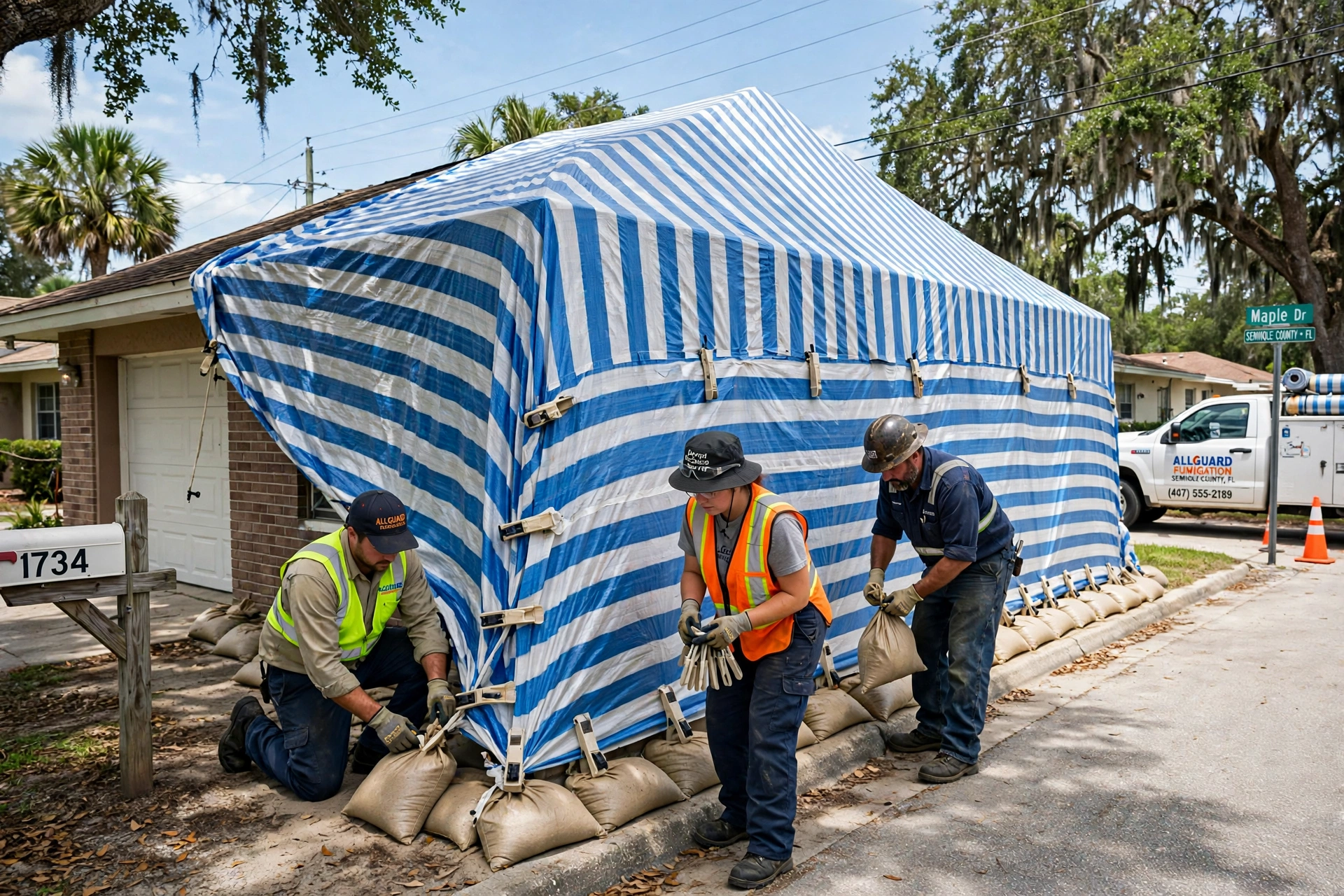
Fumigation seals the entire structure and introduces a fumigant that penetrates every void and piece of wood, treating all drywood colonies in the building at once — including colonies nobody found. No-tent treatments — localized injection into infested wood, borate applications, heat — treat specific, known colonies where they sit, with no tent and usually no moving out.
The difference is not strength; it is scope. Fumigation’s reach is the whole building. Localized treatment’s reach is the wood it touches.
Where no-tent treatment is the right answer
When the infestation is genuinely small and accessible: one colony in a piece of furniture, a single window frame, an early catch in one room — confirmed by an inspection that mapped the rest of the structure and found nothing. In that situation, tenting the house is overkill, and a good provider will say so.
No-tent work also fits condos and attached homes where tenting a whole building is impractical, and situations where leaving home is impossible — with the honest caveat that its coverage is only as good as the map.
Where no-tent treatment fails
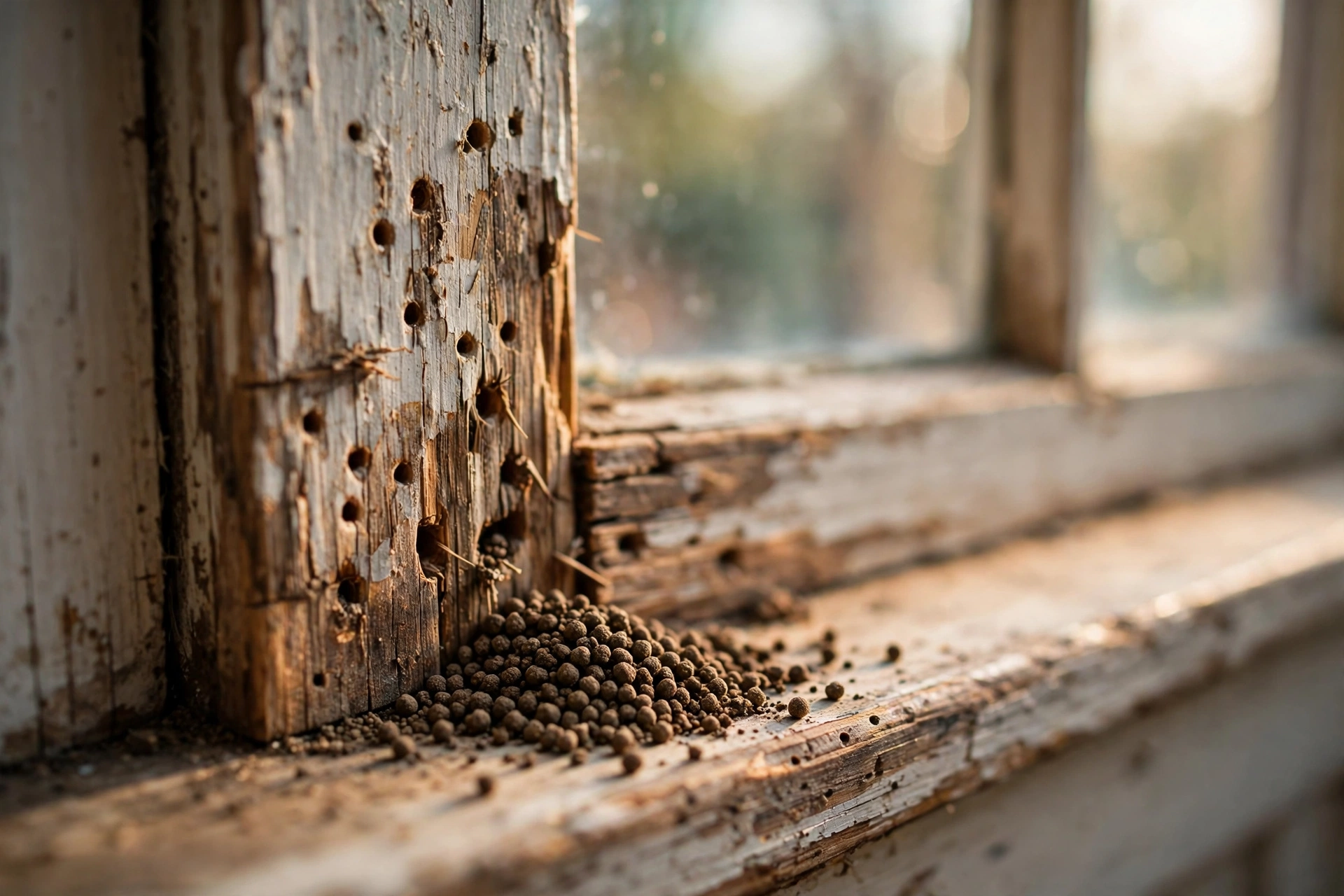
Its limit is reach. Colonies inside wall voids, roof framing and attic wood that the inspection could not confirm are colonies a spot treatment does not touch. Homeowners learn this the expensive way: treat the visible colony, celebrate, and find frass in a new room the next spring — each spot job paid separately, the structural colonies growing throughout.
If activity shows in several rooms, in the attic or framing, or keeps reappearing after spot work, the pattern is telling you the infestation is structural. That is fumigation’s home ground.
The honest middle: the map decides
Neither method should be chosen from a sales pitch — including a pitch for the bigger job. The deciding document is the colony map from a full-structure inspection: where activity is, where it is not, and what is genuinely uncertain. Fumigation answers uncertainty by treating everything; localized treatment bets the map is complete.
Ask any provider two questions: ‘Show me the map’ and ‘What happens if there is a colony you couldn’t see?’ Their answers will tell you more than any brochure — and a provider comfortable with both methods will have no trouble answering.
Making the call for your home
Start with the inspection, whatever you suspect the answer is. If the map comes back small, take the small treatment and keep the inspection record. If it comes back structural, fumigate once and end the cycle — it is almost always cheaper than the third spot treatment.
And treat certainty with suspicion in both directions: ‘you definitely need the tent’ without a map, and ‘we can definitely handle that spot-only’ without one, are the same sales move wearing different hats.
Per visit, usually — it is a smaller job. But if hidden colonies remain, repeat spot treatments add up while damage continues. The right comparison is total cost to actually solve your infestation, which the map determines.
Fumigation eliminates the colonies in the structure but leaves no residual barrier — new swarmers can start new colonies in later seasons. Localized treatments vary; some borate applications remain in the wood. Ask your provider what, if anything, your treatment leaves behind.
Yes — many homeowners do. The risk is only that hidden colonies grow in the meantime. If you choose the localized route, schedule a follow-up inspection so a wrong bet gets caught early.
Related Services & Guides
Have This Problem at Your Home?
Guides explain the problem — an inspection shows whether it is yours. One call connects you with an independent local fumigation provider in the Oviedo area.
Call (888) 555-0199 →Get in Touch with Us
The fastest way to reach a local fumigation provider is by phone — describe what you are seeing (frass, swarmers, damaged wood), where in the home, and since when.