Signs of Termite Damage in Florida Homes: What to Look For
Termite damage in a Florida home is usually discovered sideways — a door that suddenly sticks, paint that blisters, a baseboard that crumbles under the vacuum. This guide separates the signs of active infestation from the scars of old damage, room by room, so you know what deserves an inspection now.
The early signs most people walk past
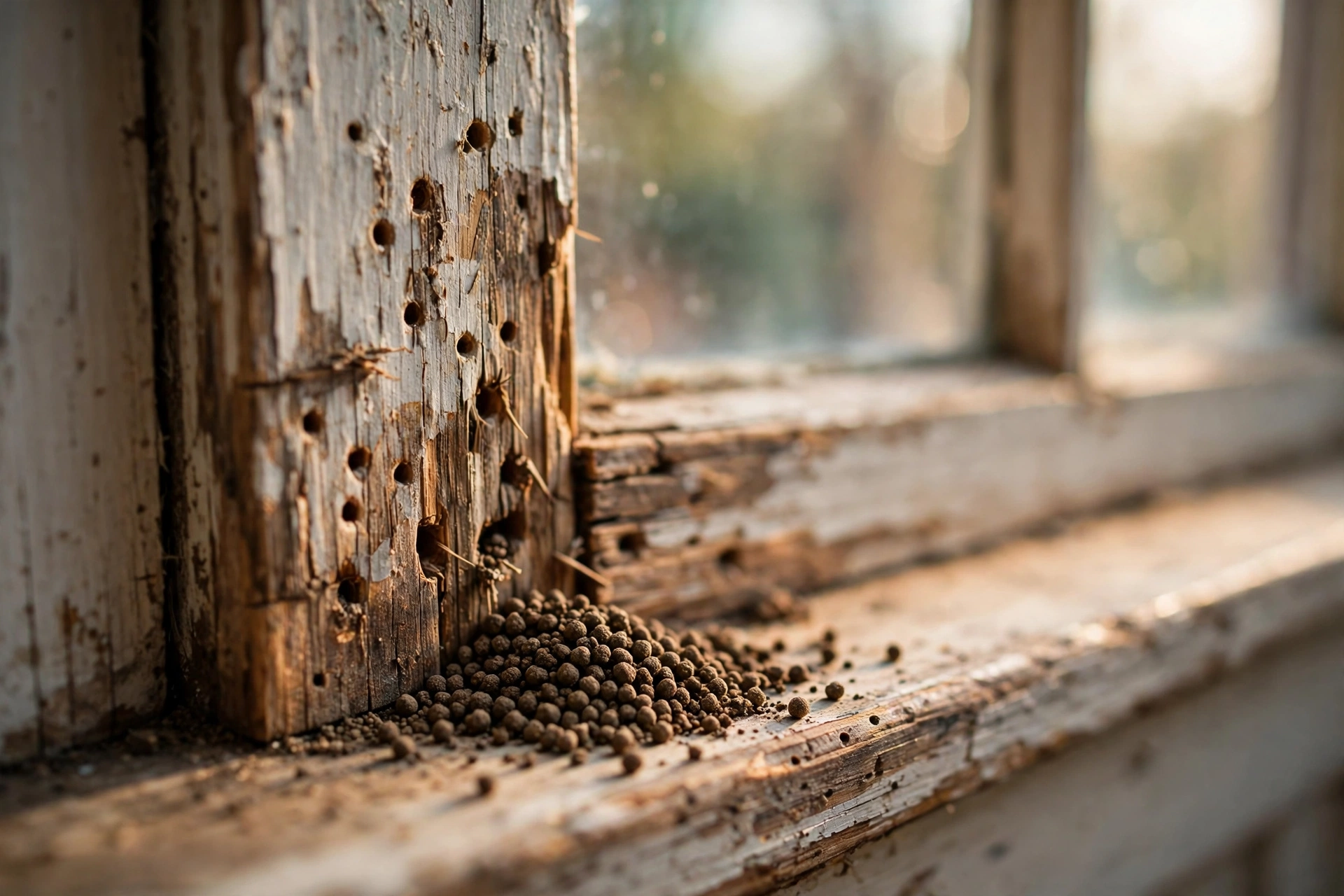
Long before wood fails, drywoods leave subtler marks: frass piles under trim, pinhead kickout holes in painted surfaces, wings on sills in spring, and faint bubbling or unevenness in paint over galleries running just beneath the surface. Doors and windows that begin sticking in a home where they never stuck before can mean frames being eaten out of square from inside.
None of these signs hurts yet. That is exactly why they matter — every one of them is cheaper to answer now than the same colony is later.
Structural signs: when wood itself is failing
Hollow-sounding studs and joists, trim that dents under thumb pressure, flooring that feels spongy over eaten substructure, and sagging or cracking at ceiling lines over heavily worked framing — these mean colonies have been feeding long enough to remove meaningful wood. In attics, look along rafter tails and top plates for the same papered, tunneled texture.
Structural signs do not automatically mean structural danger, but they do end the watch-and-wait option. Get the home mapped by an inspector promptly, and let the map — not fear — size the problem.
Active damage vs. old damage
Old, dead colonies leave identical-looking galleries, and florida homes carry decades of history. The difference is in the evidence of life: returning frass in fresh colors, swarmers in season, kickout holes with fresh pellets below. Old frass is dull and dusty and does not reappear after cleaning; old galleries are dry and empty.
This distinction decides real money — a home with only historic damage may need monitoring, not treatment. It is also a distinction a good inspection makes carefully, and one reason a WDO report distinguishes ‘visible evidence’ from active infestation.
Where damage hides, room by room
Kitchens and bathrooms: cabinet framing and window trim near moisture, where wood stays slightly softer. Attics: rafters, joists and stored wood — the least-visited, driest, most colonized space in most Florida homes. Garages: stored furniture, wood shelving and the framing around the door. Porches and lanais: exposed trim and fascia that swarmers reach first.
A homeowner’s own walk with a flashlight and a screwdriver handle — tap, listen, look for pellets — covers most of this in twenty minutes, twice a year.
What to do with what you find
Document before you disturb: photos, locations, a bagged sample of frass or swarmers. Then bring in an inspection. If the damage is active and localized, a targeted treatment may end it; if the map shows the multi-room, attic-involved pattern, you are in whole-structure territory — and finding that out is the inspection’s whole job.
Either way, you will have converted a vague worry into a bounded problem with named options. That conversion is the real product of an honest inspection.
Damaged wood can be repaired or replaced once the colony is treated — from sistering a joist to replacing trim. The sequence matters: treat first, then repair, so new wood is not re-infested.
Generally, no — insurers typically treat termite damage as a preventable maintenance issue. Check your own policy, but plan on treatment and repair being homeowner expenses.
Drywood colonies grow slowly — a single colony may take years to do visible harm. The danger is multiplication: several colonies feeding at once, across seasons, in framing nobody inspects.
Related Services & Guides
Have This Problem at Your Home?
Guides explain the problem — an inspection shows whether it is yours. One call connects you with an independent local fumigation provider in the Oviedo area.
Call (888) 555-0199 →Get in Touch with Us
The fastest way to reach a local fumigation provider is by phone. Prefer to write it down first? Send the short form — describe what you are seeing (frass, swarmers, damaged wood), where in the home, and since when.