How Long Does Termite Fumigation Take? The 3-Day Timeline
Most homeowners ask the same question first: how long will we be out of the house? For most Florida homes, tent fumigation follows a three-day arc — preparation and tenting, exposure, then aeration and clearance. This guide walks the timeline day by day, including the parts that happen before and after the tent itself.
Before day one: inspection and preparation
The clock starts before the tent. An inspection and colony map come first — usually a single visit — and then your preparation: bagging food and medicine, arranging pets, moving plants. Providers typically schedule the fumigation days a week or more out, so the prep happens in evenings, not in a panic.
Build your own plan backwards from tent day: where you will sleep, where the pets go, what comes with you. Two or three nights away is the standard assumption for a whole-structure job.
Day one: prep check, tent and introduction
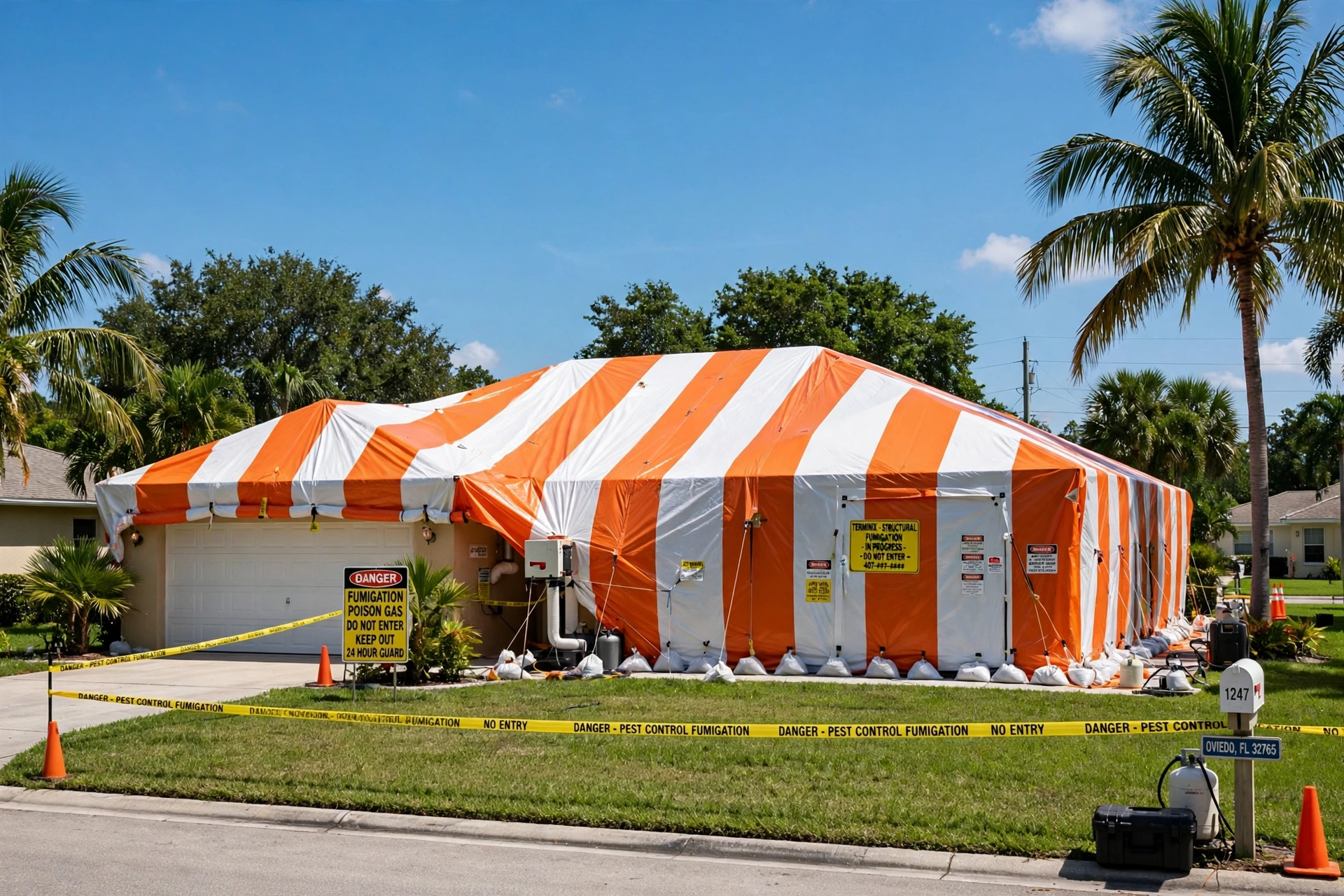
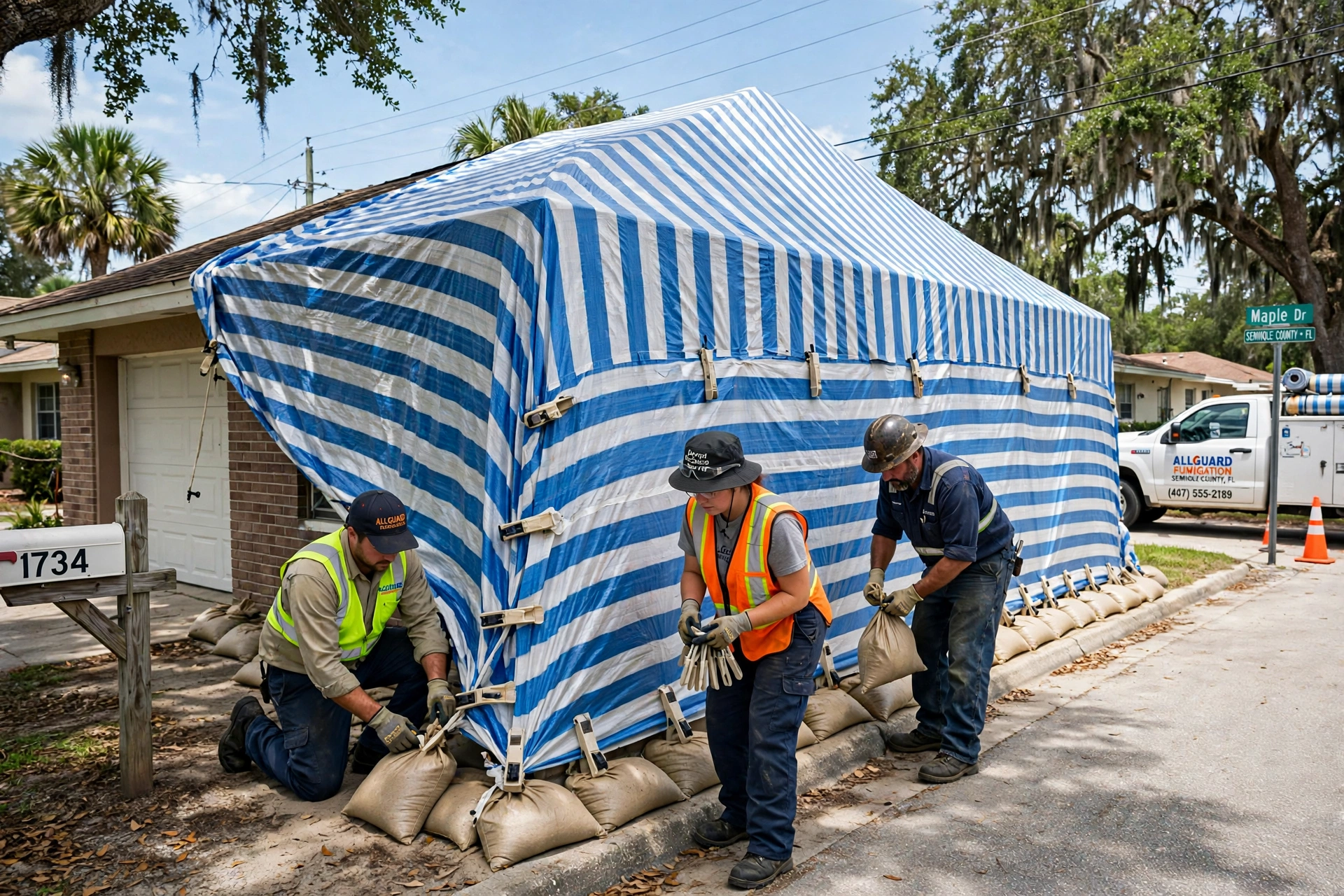
The crew arrives, verifies preparation, and raises the tent — tarps draped over the whole structure and sealed at the ground. The home is posted and locked, the warning agent and fumigant are introduced at the calculated dosage, and the exposure clock starts. You are out from this point until clearance.
Day one is the labor-heavy day, and it is weather-sensitive: high winds or storms can push a tent day, which is why good providers keep a buffer when a closing or a trip is attached to the schedule.
Day two: the exposure period
The fumigant is held inside the sealed structure at the labeled concentration for the calculated exposure period — commonly a full day or longer depending on the structure and the label’s dosage plan. The home stays locked and posted; nobody enters, including the crew, except for scheduled monitoring consistent with the label.
This is the quiet day in your timeline and the one that cannot be shortened. The dosage math assumes it; compressing exposure is how treatments fail.
Day three: aeration and clearance
The tent comes off and the structure is aerated — opened and ventilated so the fumigant dissipates. Then comes the step that actually returns your keys: clearance testing. The provider measures fumigant levels with sensitive instruments, and the home is released for re-entry only when readings meet the label’s clearance standard.
If readings need more time, aeration continues — clearance is a measurement, not a negotiation. Most homes clear on the planned day, and you sleep in your own bed that night.
What can stretch the timeline
Large or complex structures (multi-story, attached units, big volumes) may run longer exposure or aeration. Weather delays hit tent day, not the chemistry days. Preparation problems found on day one — unbagged food, a pet with nowhere to go — are the most common self-inflicted delay, and the easiest to prevent.
Ask your provider, in writing, for your specific schedule: most will give you the three dates and the clearance expectation before you book anything around them.
No — the exposure period alone runs about a day or more, between tenting on one side and aeration and clearance on the other. Anyone promising a one-day whole-structure fumigation is not describing the real process.
When clearance testing confirms fumigant levels meet the label standard and the provider releases the home. On a standard three-day job, that is the third day — your provider confirms the time that day.
No — preparation is yours and happens before day one, at your pace. The three days count the crew’s work: tent, exposure, aeration and clearance.
Related Services & Guides
Have This Problem at Your Home?
Guides explain the problem — an inspection shows whether it is yours. One call connects you with an independent local fumigation provider in the Oviedo area.
Call (888) 555-0199 →Get in Touch with Us
The fastest way to reach a local fumigation provider is by phone. Prefer to write it down first? Send the short form — describe what you are seeing (frass, swarmers, damaged wood), where in the home, and since when.