WDO Inspections & Fumigation When Selling a Florida Home
In Florida real estate, three letters follow almost every wood-frame home sale: WDO — wood-destroying organisms. When a WDO inspection reports active drywood termites, fumigation often becomes part of the transaction. This guide explains what the report says, who acts on it, and how the treatment fits a closing timeline.
What a WDO inspection is (and is not)
A WDO inspection is a visual inspection of accessible areas for evidence of wood-destroying organisms — termites, certain beetles, and wood-decay fungi — documented on the standard report used in Florida transactions. It records visible evidence: frass, galleries, swarmers, mud tubes, damaged wood. It does not open walls, and it does not certify a home ‘termite-free’ — it certifies what was visible on that day.
Lenders and buyers rely on it because it is standardized and licensed. A report noting active drywood infestation in the structure is the document that starts most transaction fumigations.
What happens when the report finds drywoods
The finding enters the negotiation. Depending on the contract, the seller may agree to treat, the buyer may accept and treat after closing, or the parties may split the difference — Florida contracts handle this in their own clauses, and the real-estate professionals guide that part. The pest side of the decision is narrower: is the documented activity localized, or structural?
A single colony noted in one location may be resolved with localized treatment documented for the file. Activity in framing, the attic, or multiple locations usually points to fumigation, because the transaction needs a treatment that addresses the whole report — and the whole structure.
Fitting fumigation into a closing timeline
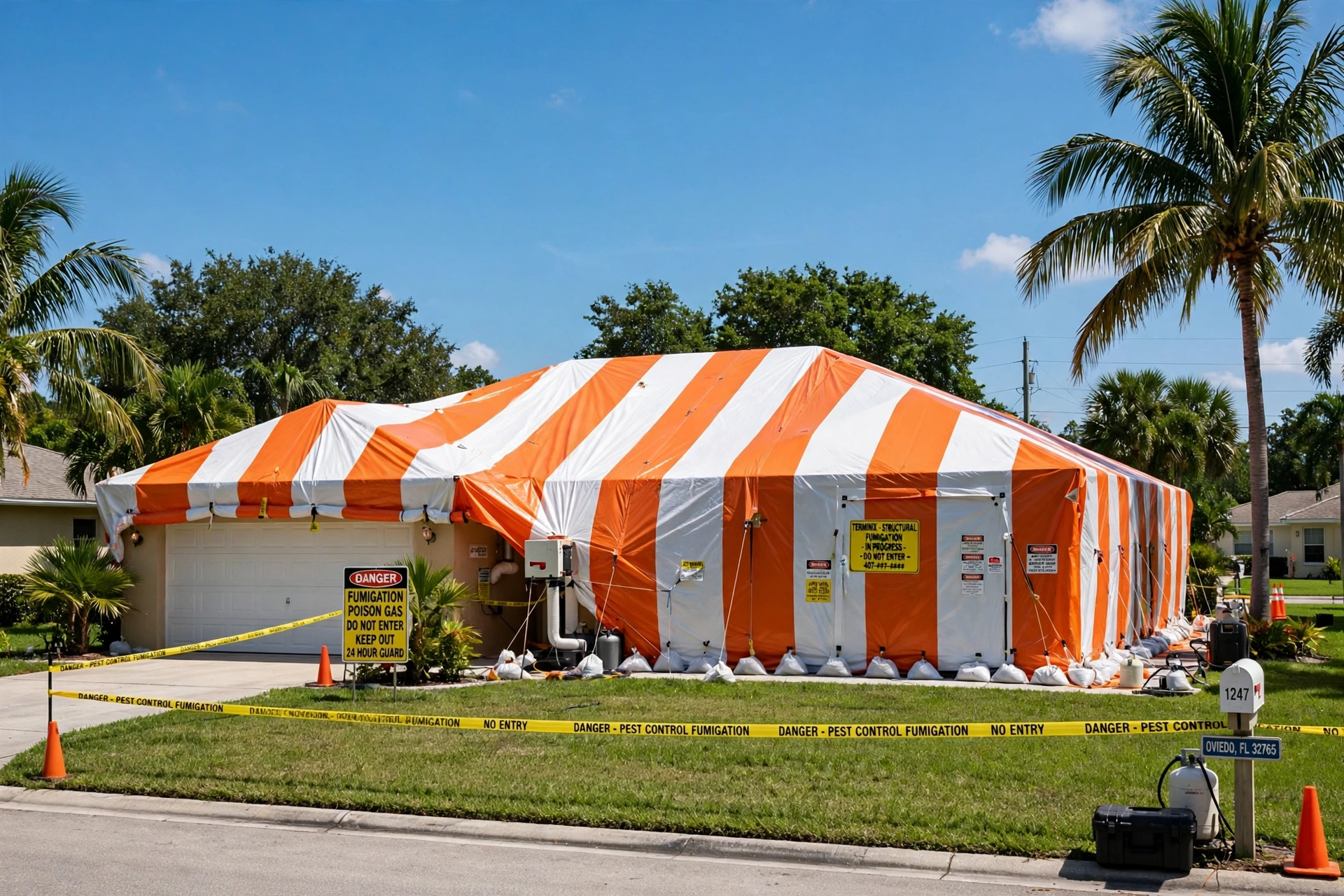
Fumigation needs roughly three days — tent, exposure, aeration and clearance — plus homeowner preparation before day one. Against a closing date, that means sequencing: the WDO early, the treatment decision immediately after, the tent dates locked with a buffer for weather, and documentation delivered before signatures.
The classic failure mode is a late WDO: findings in the final week, everyone scrambling. Sellers who suspect drywood history do themselves a favor by inspecting before listing, when the timeline is theirs to control.
Vacant vs. occupied homes in a sale
Vacant homes are the easy case: no preparation burden beyond removing or bagging anything consumable left inside, and tent dates flex freely. Occupied homes need the full prep checklist worked by whoever the contract assigns — that assignment should be explicit, because ‘the seller will handle prep’ discovered on tent day is a closing delay waiting to happen.
Either way, the provider’s documentation of the completed treatment goes to all parties — it is the piece of paper the file needs, and it should say what was treated, when, and by whom.
For buyers reading an old WDO
An old report showing treated infestation is history, not a defect — Florida homes accumulate WDO paper the way they accumulate paint layers. What matters is whether treatment was documented and whether any current evidence exists. A fresh inspection before closing answers the second question; the file answers the first.
And if you are buying a home with drywood history, the cheapest fumigation window in your ownership may be the empty days between closing and move-in. Many buyers use exactly that window.
Not by the state in every sale — but many lenders (notably VA and FHA loans) require it, and many contracts call for one. In practice, most Florida wood-frame transactions involve a WDO.
The contract decides — it is a negotiated item, with sellers commonly handling treatment of reported active infestations. There is no universal rule; your agent and the contract language govern.
It can, if the parties and lender agree — treatment is then scheduled right after closing, often before move-in. What lenders usually require is that the arrangement is documented.
Related Services & Guides
Have This Problem at Your Home?
Guides explain the problem — an inspection shows whether it is yours. One call connects you with an independent local fumigation provider in the Oviedo area.
Call (888) 555-0199 →Get in Touch with Us
The fastest way to reach a local fumigation provider is by phone. Prefer to write it down first? Send the short form — describe what you are seeing (frass, swarmers, damaged wood), where in the home, and since when.