Drywood vs. Subterranean Termites in Florida: How to Tell Them Apart
Florida has both termite worlds: drywoods that live inside your woodwork, and subterraneans that commute from soil colonies through mud tubes. They damage homes differently, announce themselves differently, and are treated completely differently. This guide draws the line between them — because the wrong identification leads to the wrong treatment.
Where they live
Drywood termites live inside the wood they eat — a colony is a self-contained household in a beam, a window frame, a piece of furniture, needing no contact with the ground and no external moisture source. A single home can host many independent drywood colonies at once.
Subterranean termites live in the soil and travel up into structures to feed, returning to the ground’s moisture. They build mud shelter tubes over foundations and through cracks to make the trip safely. Formosan termites — present in parts of Florida — are an aggressive subterranean species whose colonies can be enormous.
The evidence each one leaves
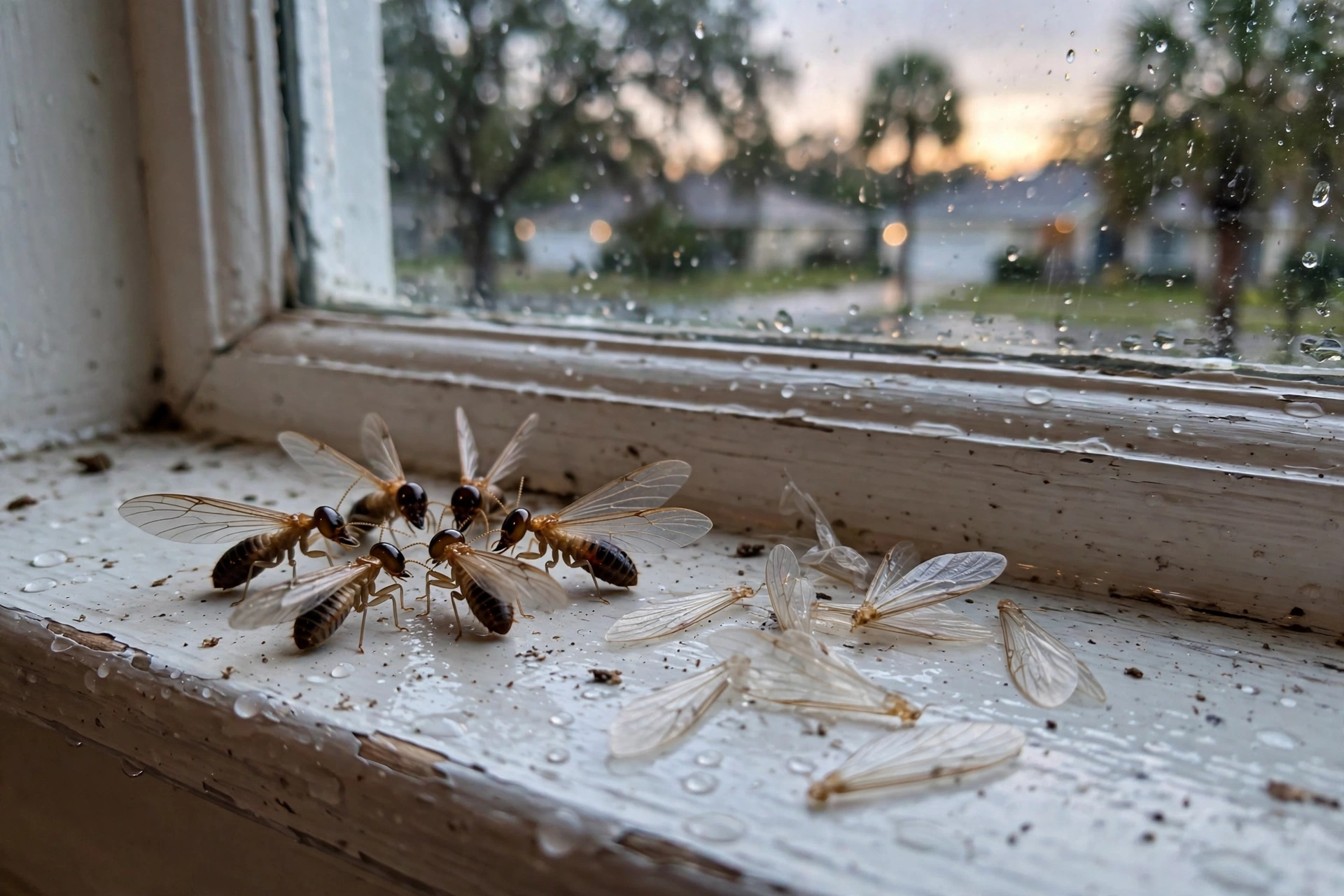
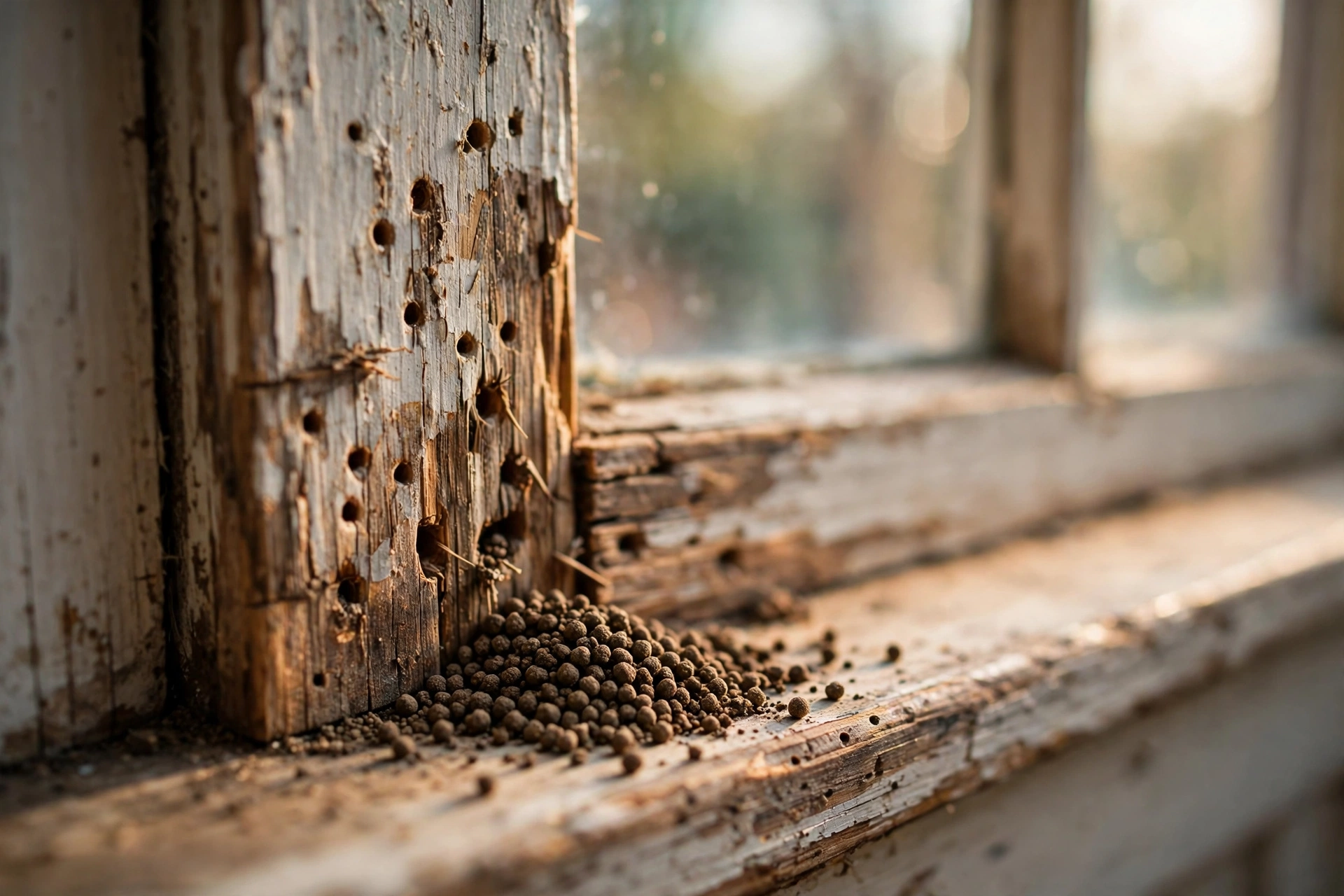
Drywoods leave frass: neat oval pellets pushed out of kickout holes, plus shed wings in spring. No mud, no tubes, ever — pellets and wings are their whole signature.
Subterraneans leave mud tubes on foundation walls and piers, dirt packed into damaged wood, and wood that is eaten along the grain with soil in the galleries. Their swarmers appear in the same general spring season, which is why saved specimens matter: the two termites’ swarmers differ, and an inspector reads the difference instantly.
The damage patterns
Drywood damage is local to each colony’s piece of wood — a frame hollowed here, a rafter tunneled there, scattered through the structure wherever colonies landed. Subterranean damage concentrates where wood meets their travel routes from the ground: sill plates, lower framing, door casings at grade — and can be severe and fast, especially with Formosans.
Both are found in Oviedo-area homes, and a home can have both problems at once. Each needs its own map.
The treatments are entirely different
Drywood colonies are treated in the wood: fumigation for structural or widespread infestations, localized treatment for single accessible colonies. Soil-based prevention does nothing for a colony living in your attic beam.
Subterranean termites are treated at the soil: liquid termiticides or bait systems around and under the structure, aimed at the colony in the ground. Fumigating a house does not address a subterranean colony in the yard. Identification is therefore not academic — it is the whole treatment plan.
What to do with a suspicion
Gather the evidence without disturbing it more than you must: pellets or tubes, wings or swarmers in a sealed bag, photos of where you found them. Then have the home inspected by a provider who will name the species before naming a treatment.
Be wary of any quote given before identification. ‘Termites’ is not a diagnosis — drywood or subterranean is, and everything honest follows from it.
Subterraneans — especially Formosans — usually damage faster because their colonies are far larger. Drywoods are slower but stealthier, multiplying colony by colony inside a structure for years. Both deserve prompt, correct treatment.
Yes — it is not uncommon in Florida. An attic drywood colony and a soil colony feeding at the baseboards are separate problems needing separate treatments.
Never. Mud tubes are a subterranean signature — drywoods build nothing outside their wood. Tubes on your foundation mean a soil colony is visiting.
Related Services & Guides
Have This Problem at Your Home?
Guides explain the problem — an inspection shows whether it is yours. One call connects you with an independent local fumigation provider in the Oviedo area.
Call (888) 555-0199 →Get in Touch with Us
The fastest way to reach a local fumigation provider is by phone. Prefer to write it down first? Send the short form — describe what you are seeing (frass, swarmers, damaged wood), where in the home, and since when.