What Is Vikane? The Fumigant Used in Tent Fumigation, Explained
Homeowners hear the brand name constantly during a fumigation — ‘we’ll Vikane the house’ — but what actually is it? Vikane is the trade name for sulfuryl fluoride, the fumigant used in virtually all structural drywood fumigations in Florida. This guide explains how it works, why it is used, and how the safety system around it operates.
What sulfuryl fluoride is
Sulfuryl fluoride is a colorless, odorless gas fumigant, sold for structural fumigation under the brand name Vikane. Introduced into a sealed, tented structure at a calculated dosage, it penetrates wood, wall voids and furnishings, and it is lethal to drywood termites — including their eggs, which many contact treatments cannot kill — at every life stage inside the treated space.
Penetration is its defining trait. Where a spray touches surfaces, a gas occupies the whole volume, which is precisely why fumigation is the answer for colonies hidden anywhere in a structure.
Why a warning agent rides along
Because sulfuryl fluoride is odorless, the label requires a warning agent — chloropicrin, a tear-gas-like compound — to be introduced with it. Chloropicrin’s intense eye irritation warns anyone who might enter the structure that fumigant is present. It is a safety system built into every job, not an optional extra.
The structure is also posted with warning signs and locked with secondary locks during the job — layers of the same system: make the hazard obvious, and entry impossible, while the fumigant is at work.
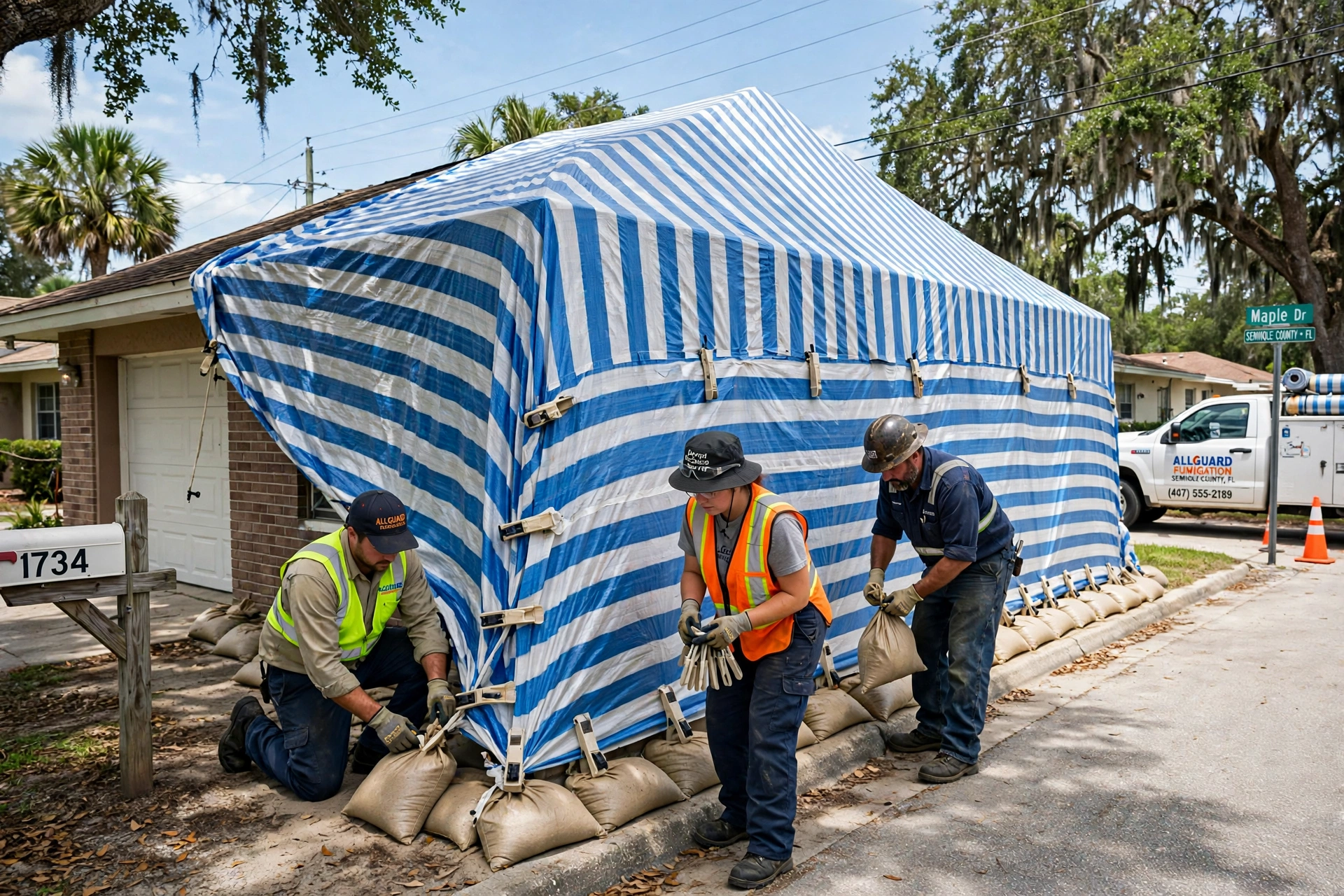
How dosage is calculated
There is no ‘standard amount.’ The fumigator measures the structure’s volume, accounts for its construction and conditions, and calculates the dosage and exposure period from the product label — the legal document that governs every application. Monitoring during the job verifies the fumigant holds at the intended concentration.
This is licensed, regulated work: in Florida, structural fumigation is performed by certified fumigators under FDACS rules (Chapter 482), following the label exactly. When a provider talks about ‘the label,’ this calculation is what they mean.
What happens after: aeration and clearance
When the exposure period ends, the tent is removed and the structure is aerated — opened and ventilated so the fumigant dissipates completely. Sulfuryl fluoride does not leave residue on surfaces, dishes or furniture; it leaves with the air. Before anyone re-enters, the fumigator tests the air with sensitive detection instruments and releases the home only when levels meet the clearance standard on the label.
That clearance step is why returning home after fumigation does not involve scrubbing every surface — but your provider’s re-entry instructions still govern the first hours back, and they should be followed as given.
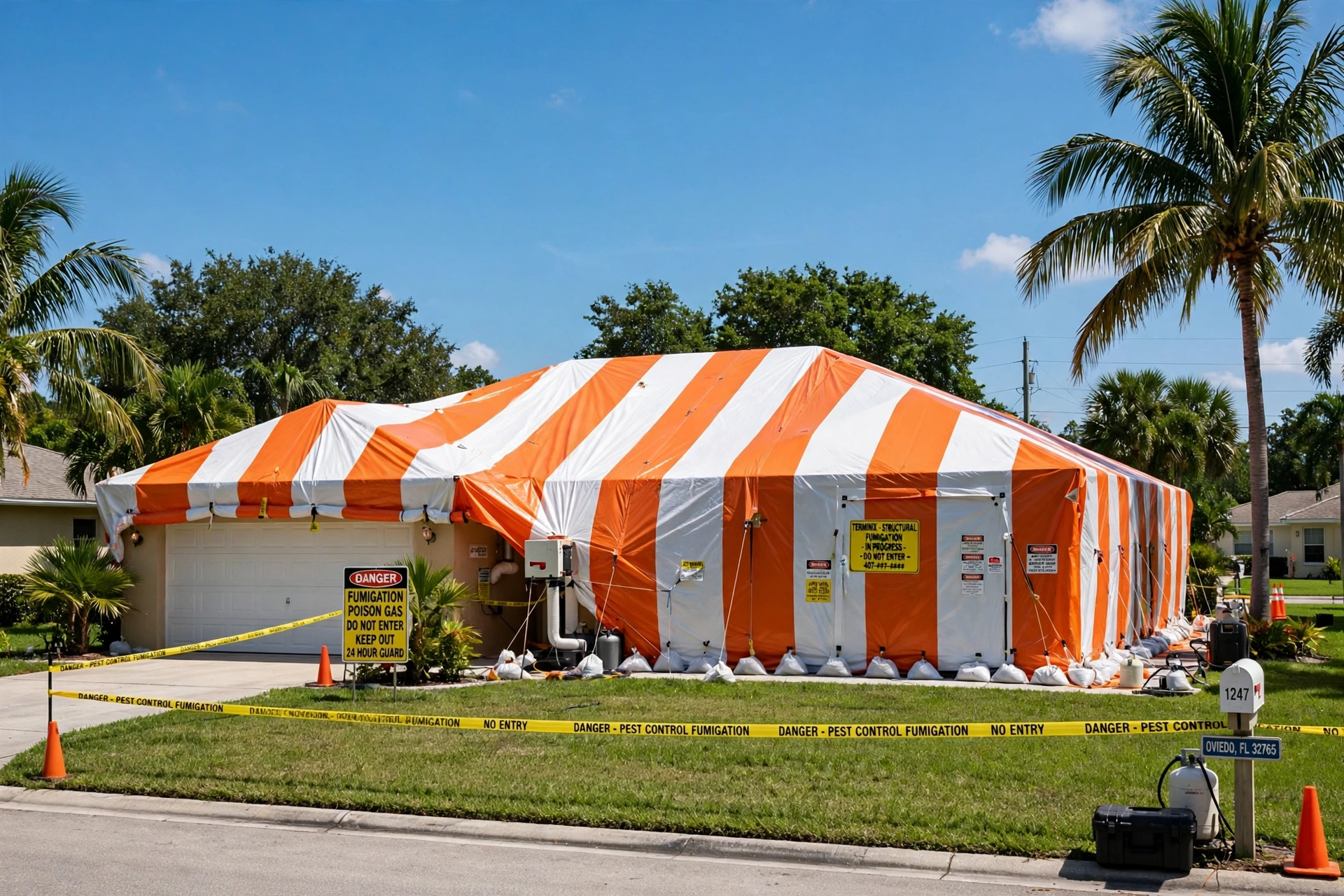
Common questions the name raises
Is it the same as a ‘bug bomb’? No — consumer foggers release a surface pesticide mist in open air; structural fumigation is a measured gas in a sealed building, applied by licensed fumigators under a federal label. Is it used for bed bugs and other pests? The same fumigant is used for some other structural pests at different dosages — drywood termites are its classic Florida application.
The brand name is famous because the process works. Understanding the system around it — dosage, warning agent, posting, clearance — is understanding why fumigation, done properly, is both thorough and controlled.
No. Sulfuryl fluoride dissipates during aeration and does not leave residue on surfaces, furniture or dishes. That is also why food and medicine must be bagged or removed — protection during the job, not cleanup after.
It is a potent fumigant, which is why its use is wrapped in regulation: licensed fumigators, calculated dosage, a warning agent, posted and locked structures, and instrument clearance before re-entry. Those controls are the safety story.
Structural fumigants are restricted-use products applied only by certified fumigators — the licensing, equipment and label calculations are not a DIY category in Florida.
Related Services & Guides
Have This Problem at Your Home?
Guides explain the problem — an inspection shows whether it is yours. One call connects you with an independent local fumigation provider in the Oviedo area.
Call (888) 555-0199 →Get in Touch with Us
The fastest way to reach a local fumigation provider is by phone — describe what you are seeing (frass, swarmers, damaged wood), where in the home, and since when.